- Gurgaon Pataudi Road, Near Laxmi Furniture, Sector - 89, Gurugram - 122004 INDIA
- +91- 8826447707
- 0124500099
- amanhospital1829@gmail.com

PCOS and Fertility: What Every Woman Needs to Know

Laparoscopic Ovarian Cyst Removal: Benefits & Recovery
July 1, 2026
Weight Management for Women with PCOS: A Complete Guide
July 11, 2026
Polycystic Ovary Syndrome, commonly known as PCOS, is one of the most widespread hormonal disorders affecting women of reproductive age. If you or someone you know has been diagnosed with PCOS, one of the biggest concerns is often: will this affect my chances of having a baby? The short answer is yes — PCOS infertility is a real and common challenge. Consulting the Best Gynecologist and Obstetrician in Gurgaon can help you receive a personalized evaluation, appropriate treatment options, and guidance to improve your chances of conception. But the encouraging news is that it is manageable, and many women with PCOS go on to conceive successfully with the right approach.
What Is PCOS?
PCOS is an endocrine disorder that affects how the ovaries function. Women with PCOS often have higher-than-normal levels of androgens (male hormones), which can interfere with the normal development and release of eggs during the menstrual cycle. The condition gets its name from the small, fluid-filled sacs (follicles) that can develop on the ovaries, although not every woman with PCOS actually has visible cysts.
PCOS affects an estimated 8–13% of women of reproductive age worldwide, making it one of the leading causes of reduced fertility in women today.
How PCOS Affects Fertility
The connection between PCOS infertility and hormonal health is complex, but it largely comes down to disrupted ovulation. Here’s how it works:
1. Ovulation Disorders
For pregnancy to occur, the ovaries need to release a mature egg each month — a process called ovulation. In women with PCOS, elevated androgen levels and abnormal hormone signaling from the brain often prevent follicles from maturing properly. Instead of releasing an egg, the follicles may stall, leading to ovulation disorders where ovulation happens irregularly or not at all (a condition called anovulation).
Without regular ovulation, natural conception becomes significantly more difficult, since there’s no egg available for fertilization during many cycles.
2. Hormonal Imbalance
At the root of PCOS is a hormonal imbalance involving elevated androgens, disrupted levels of luteinizing hormone (LH) and follicle-stimulating hormone (FSH), and sometimes elevated estrogen. This imbalance throws off the delicate signaling system between the brain and ovaries that’s required for a normal reproductive cycle.
This hormonal imbalance doesn’t just affect ovulation — it can also impact the uterine lining, making it harder for a fertilized egg to implant successfully even if conception does occur.
3. Insulin Resistance
A large percentage of women with PCOS — estimates suggest 50–70% — also experience insulin resistance. This means the body’s cells don’t respond efficiently to insulin, causing the pancreas to produce more of it. Excess insulin can stimulate the ovaries to produce even more androgens, worsening the hormonal imbalance and further disrupting ovulation.
Insulin resistance is also linked to weight gain, which can create a frustrating cycle: excess weight can worsen insulin resistance, and insulin resistance can make weight loss more difficult — all while further impairing fertility.
4. Irregular Menstrual Cycles
One of the most noticeable signs of PCOS is irregular menstrual cycles. Some women may have cycles that are much longer than the typical 28 days, while others may go months without a period at all. Irregular cycles are essentially an external sign of what’s happening internally — inconsistent or absent ovulation.
Because irregular cycles make it harder to predict fertile windows, they add another layer of difficulty for women trying to conceive naturally.
Signs You Might Have Ovulation Problems Due to PCOS
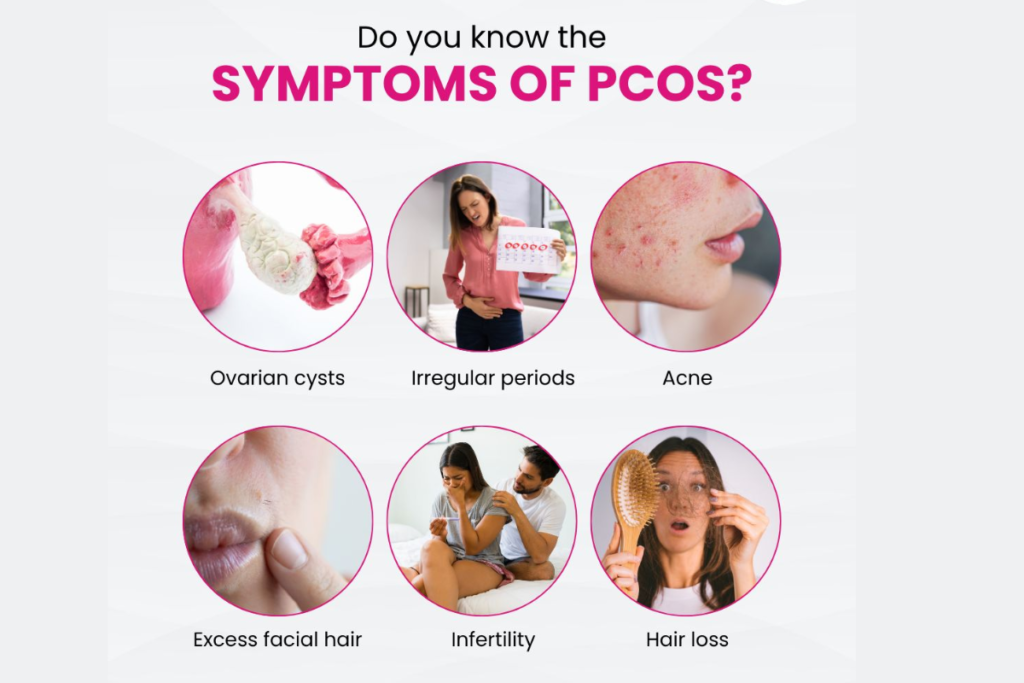
If you’re wondering whether PCOS might be affecting your fertility, here are some common signs to watch for:
- Menstrual cycles longer than 35 days, or fewer than 8 cycles per year
- Unpredictable or absent periods
- Excess facial or body hair growth (hirsutism)
- Acne or oily skin
- Unexplained weight gain, particularly around the abdomen
- Thinning hair on the scalp
- Difficulty losing weight despite diet and exercise
- Darkened skin patches (a sign of insulin resistance)
If you notice several of these symptoms together, it’s worth speaking with a healthcare provider or reproductive endocrinologist for proper testing and diagnosis.
Diagnosing PCOS-Related Fertility Issues
Diagnosis typically involves a combination of:
- Blood tests to check hormone levels (androgens, LH, FSH, insulin)
- Pelvic ultrasound to examine the ovaries for follicle patterns
- Ovulation tracking through basal body temperature, ovulation predictor kits, or blood progesterone tests
- Glucose tolerance testing to assess insulin resistance
A proper diagnosis is the first step toward creating an effective, personalized fertility plan.
Treatment Options for PCOS and Fertility
The good news is that PCOS infertility is one of the more treatable forms of infertility, especially when ovulation is the primary issue. Here are the most common approaches:
Lifestyle Changes
For many women, especially those with insulin resistance, even a modest weight loss of 5–10% can help restore regular ovulation. Diet changes (particularly reducing refined carbohydrates and sugar), regular exercise, and improved sleep can meaningfully improve hormonal balance and menstrual regularity.
Medications to Induce Ovulation
- Letrozole – Often considered a first-line treatment, this medication helps stimulate ovulation.
- Clomiphene Citrate (Clomid) – Another commonly prescribed ovulation-inducing medication.
- Metformin – Primarily used to manage insulin resistance, which can indirectly improve ovulation and menstrual regularity.
Assisted Reproductive Technologies
If oral medications aren’t effective, additional options include:
- Intrauterine Insemination (IUI) – Often combined with ovulation-inducing medications.
- In Vitro Fertilization (IVF) – A highly effective option for women who don’t respond to other treatments, involving egg retrieval, fertilization in a lab, and embryo transfer.
- Laparoscopic Ovarian Drilling – A minor surgical procedure sometimes used in specific cases to help restore ovulation.
Managing Insulin Resistance
Since insulin resistance plays such a central role in many PCOS cases, addressing it directly — through diet, exercise, and sometimes medication like metformin — can have a significant positive ripple effect on hormone levels and ovulation.
Living With PCOS: A Note of Encouragement
It’s important to remember that a PCOS diagnosis does not mean infertility is guaranteed or permanent. Many women with PCOS conceive naturally, and many more do so successfully with medical support. The key is early diagnosis, consistent management of symptoms, and working closely with a healthcare provider who understands the condition.
Managing PCOS is often a long-term journey rather than a one-time fix. Regular monitoring of menstrual cycles, hormone levels, and metabolic health can help catch and address issues early, improving both fertility outcomes and overall wellbeing.
Final Thoughts
To summarize, PCOS infertility is primarily driven by four interconnected factors: ovulation disorders, hormonal imbalance, insulin resistance, and irregular menstrual cycles. While these challenges are real, they are also well understood by modern medicine, and effective treatments exist for nearly every stage of the fertility journey. In rare situations where patients experience severe complications requiring advanced medical support, access to a Critical Care Unit in Gurugram ensures comprehensive care from a multidisciplinary healthcare team. Early diagnosis, appropriate treatment, and regular follow-up remain the key to improving fertility outcomes and overall reproductive health.
If you’re struggling with PCOS and trying to conceive, don’t lose hope. Speak with a gynecologist or reproductive endocrinologist who can help you build a personalized plan based on your specific hormone levels, symptoms, and goals. With the right support, pregnancy is a very achievable goal for the vast majority of women with PCOS.