- Gurgaon Pataudi Road, Near Laxmi Furniture, Sector - 89, Gurugram - 122004 INDIA
- +91- 8826447707
- 0124500099
- amanhospital1829@gmail.com

PCOS and Irregular Periods: Understanding the Hormonal Connection

Weight Management for Women with PCOS: A Complete Guide
July 11, 2026
10 Best Lactation-Boosting Foods for New Moms: A Complete Guide to Eating for Breastfeeding Success
July 22, 2026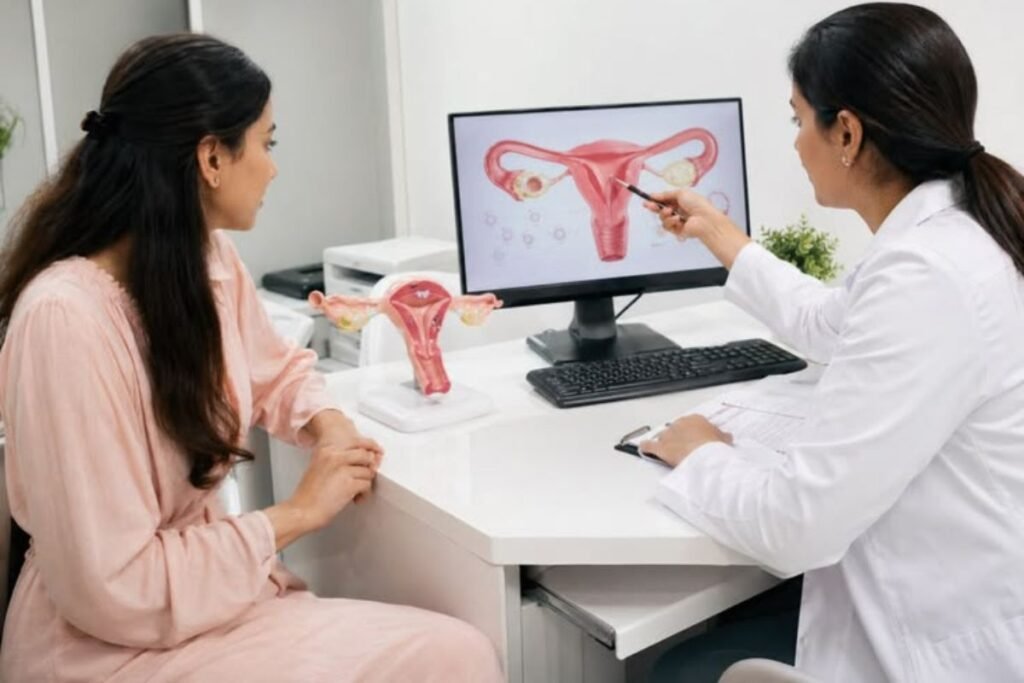
If your menstrual cycle has become unpredictable — skipping months, arriving too often, or varying wildly in length — you’re not alone. Millions of women experience irregular periods, and one of the most common underlying causes is Polycystic Ovary Syndrome (PCOS). Understanding the connection between PCOS and irregular periods can help you recognize symptoms early, seek the right diagnosis, and take steps toward better hormonal health.
If you’re experiencing persistent irregular periods or other symptoms of PCOS, consulting the Best Gynecologist and Obstetrician in Gurgaon can help you receive an accurate diagnosis and a personalized treatment plan to manage your hormonal health effectively.
In this article, we’ll break down exactly why PCOS disrupts the menstrual cycle, what’s happening inside your body when this occurs, and what you can do about it.
What Is PCOS?
PCOS, or Polycystic Ovary Syndrome, is one of the most common hormonal disorders affecting women of reproductive age, impacting an estimated 8-13% of women worldwide. Despite its name, PCOS doesn’t always involve actual “cysts” — the term refers to the appearance of multiple small, underdeveloped follicles on the ovaries, visible on ultrasound.
PCOS is typically diagnosed when a woman has at least two of the following three features:
- Irregular or absent ovulation (leading to irregular periods)
- Elevated androgens (either in blood tests or visible symptoms like acne and excess hair growth)
- Polycystic-appearing ovaries on ultrasound
Because irregular periods are one of the core diagnostic markers, understanding why PCOS disrupts the cycle is essential for anyone trying to make sense of their symptoms.
Why PCOS Causes Irregular Periods
At the heart of PCOS-related menstrual irregularity is a disruption in the normal hormonal signaling that controls ovulation. A typical menstrual cycle relies on a precise, coordinated release of hormones from the brain and ovaries. PCOS throws a wrench into this system in several interconnected ways.
Anovulation Explained
Ovulation is the process by which an ovary releases a mature egg. In a healthy cycle, this happens roughly once a month, triggering a cascade of hormonal changes that eventually lead to a period if pregnancy doesn’t occur.
In PCOS, anovulation — the absence of ovulation — is extremely common. Instead of one dominant follicle maturing and releasing an egg, multiple smaller follicles start to develop but fail to reach full maturity. Without ovulation, the hormonal trigger for a period doesn’t occur in its usual pattern.
This is why women with PCOS often experience:
- Cycles longer than 35 days
- Fewer than 8 periods per year
- Periods that stop entirely for months at a time
- Unpredictable timing that makes planning difficult
Anovulation doesn’t mean periods never happen — it means the body isn’t following its usual monthly rhythm, which is why irregularity, rather than complete absence, is the more common experience.
The Role of Androgens
Androgens are often labeled “male hormones,” but every woman produces them in small amounts — they’re essential for normal reproductive function. In PCOS, however, the ovaries (and sometimes the adrenal glands) produce androgens in excess.
Elevated androgens interfere with the delicate feedback loop between the brain and ovaries that regulates follicle development and ovulation. Specifically, high androgen levels can:
- Prevent follicles from maturing properly
- Disrupt the release of luteinizing hormone (LH) and follicle-stimulating hormone (FSH), both essential for triggering ovulation
- Contribute to visible symptoms like acne, oily skin, and excess facial or body hair (hirsutism)
This androgen excess is a central piece of the puzzle — it’s not just a side effect of PCOS, but an active driver of the irregular periods so many women experience.
Follicle Accumulation on the Ovaries
Normally, each cycle involves several follicles beginning to develop, with one becoming dominant and releasing an egg while the others are reabsorbed. In PCOS, this process stalls. Follicles start to grow but arrest at an early stage, unable to reach full maturity.
Over time, this leads to follicle accumulation — many small, immature follicles collecting on the ovary’s surface. This is the “polycystic” appearance seen on ultrasound, and it’s a direct visual consequence of the disrupted ovulation cycle described above.
While these follicles aren’t harmful cysts in the traditional sense, their accumulation reflects a cycle that isn’t completing its normal monthly process — reinforcing the pattern of missed or irregular periods.
The Insulin Resistance Connection
One of the most important — and often overlooked — pieces of the PCOS puzzle is insulin resistance. Up to 70% of women with PCOS have some degree of insulin resistance, regardless of body weight.
Insulin resistance means the body’s cells don’t respond efficiently to insulin, so the pancreas compensates by producing more of it. This excess insulin doesn’t just affect blood sugar regulation — it directly worsens the hormonal imbalance at the root of PCOS.
Here’s the feedback loop:
- Insulin resistance leads to higher circulating insulin levels.
- Excess insulin stimulates the ovaries to produce more androgens.
- Elevated androgens further disrupt ovulation, worsening anovulation and follicle accumulation.
- This deepens the hormonal imbalance, making irregular periods more pronounced and harder to resolve without intervention.
This is why lifestyle interventions that improve insulin sensitivity — such as balanced nutrition, regular physical activity, and in some cases medication — are often central to managing PCOS symptoms, including irregular periods. Addressing insulin resistance can help break the cycle rather than just treating the symptoms individually.
Signs Your Irregular Periods May Be PCOS
Not all irregular periods are caused by PCOS, but certain patterns and accompanying symptoms raise the likelihood. Common signs include:
- Cycles longer than 35 days, or fewer than 8 periods per year
- Unpredictable cycle length — no consistent pattern month to month
- Heavy or prolonged bleeding when periods do occur (due to a buildup of the uterine lining from missed ovulation)
- Acne or oily skin, particularly along the jawline
- Excess hair growth on the face, chest, or back (hirsutism)
- Thinning hair on the scalp
- Weight gain, especially around the abdomen, or difficulty losing weight
- Skin changes, such as dark patches (acanthosis nigricans) around the neck or underarms — often linked to insulin resistance
- Difficulty conceiving, due to irregular or absent ovulation
If you notice several of these symptoms alongside irregular periods, it’s worth discussing PCOS with a healthcare provider.
When to See a Doctor
While occasional cycle irregularity is normal — stress, travel, illness, or significant weight changes can all cause temporary disruption — certain patterns warrant medical evaluation:
- Periods that are consistently irregular over several months
- Missing periods for 3 months or more (when not pregnant)
- Cycles shorter than 21 days or longer than 35 days on a regular basis
- Irregular periods combined with acne, excess hair growth, or unexplained weight changes
- Difficulty getting pregnant after 6-12 months of trying (depending on age)
A doctor can evaluate your symptoms through blood tests (checking androgen levels, insulin, and other hormones) and often a pelvic ultrasound to assess the ovaries. Early diagnosis matters — not just for managing irregular periods, but because PCOS is also linked to longer-term health considerations like type 2 diabetes risk and cardiovascular health, making it worth addressing proactively rather than waiting.
Managing PCOS-Related Irregular Periods
There’s no one-size-fits-all treatment for PCOS, but several approaches can help regulate cycles and address the underlying hormonal imbalance:
Lifestyle approaches:
- Regular physical activity, which can improve insulin sensitivity
- A balanced diet emphasizing whole foods, fiber, and lean protein to help manage insulin resistance
- Maintaining a moderate weight (even a 5-10% reduction in body weight can meaningfully improve cycle regularity for some women)
- Stress management, since chronic stress can further disrupt hormonal balance
Medical approaches:
- Hormonal birth control, often used to regulate cycles and reduce androgen-related symptoms
- Metformin, sometimes prescribed to improve insulin resistance
- Fertility medications, if pregnancy is a goal and ovulation needs support
- Anti-androgen medications, for managing symptoms like excess hair growth or acne
The right approach depends on individual goals — whether that’s symptom relief, long-term health management, or fertility planning — which is why working with a gynecologist or endocrinologist is important rather than self-treating based on general information.
Conclusion
The connection between PCOS and irregular periods comes down to a disrupted hormonal cycle: anovulation prevents the normal monthly release of an egg, elevated androgens interfere with follicle development, insulin resistance amplifies the hormonal imbalance, and the result is follicle accumulation on the ovaries and unpredictable menstrual cycles.
Seeking guidance from the Best Gynecologist and Obstetrician in Gurgaon can help identify the underlying hormonal imbalance, confirm a PCOS diagnosis, and create a personalized treatment plan to improve menstrual regularity and overall reproductive health.
Recognizing this connection is the first step toward getting the right diagnosis and treatment. If you’re experiencing persistent irregular periods along with other PCOS symptoms, don’t hesitate to reach out to a healthcare provider—early management can make a meaningful difference in both your cycle regularity and your long-term health.